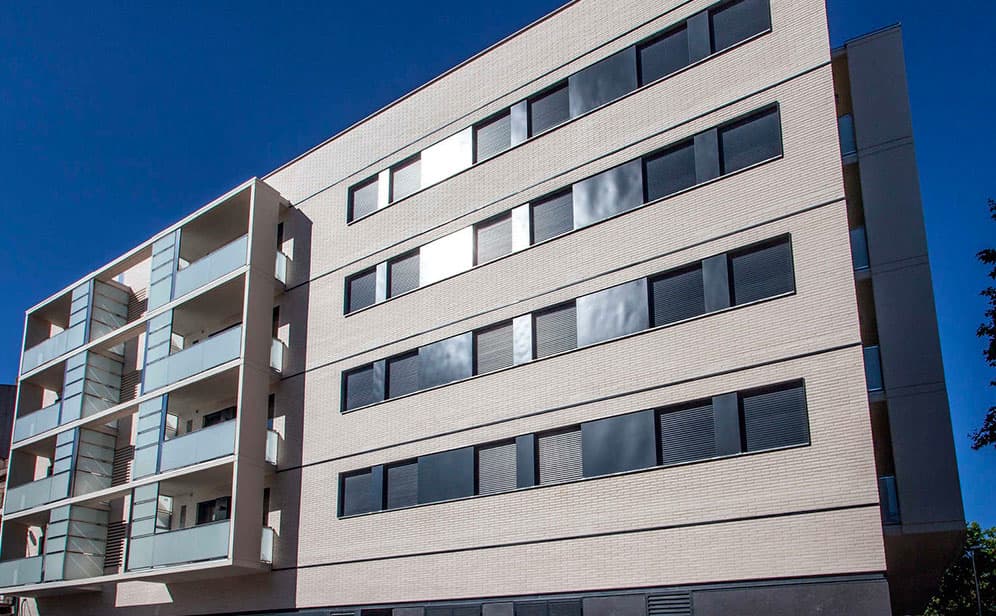
This construction system is essentially exterior insulation for facades, which eliminates thermal bridges and improves the building’s energy efficiency.
A building’s envelope—or, in other words, exterior insulation for facades—is undoubtedly one of the most important elements of any structure. With environmental awareness on the rise and the emergence of sustainable architecture, choosing an exterior thermal insulation system that improves a building’s energy efficiency is more than just an option—it’s almost an obligation.
What is known as a SATE facade is simply one of the most popular types of heavy facades in recent years—a system with undeniable advantages in terms of insulation and efficiency.
SATE Facade: What It Is and How It Works
When we talk about an ETICS-type facade, we are actually referring toan exterior thermal insulation system. Essentially, this construction system for building envelopes involves installing insulation panels on a vertical load-bearing element. Installing it from the exterior eliminates thermal bridges, which, in practice, gives this type of facade significant energy-efficiency benefits for the building—benefits that also help meet increasingly stringent regulations.
Contrary to what it may seem, there is a wide range of finishes, but the components are generally the same in each case. In addition to the adhesive mortar used to bond the insulation panels, the system includes mechanical fasteners for the panels as well as auxiliary trim pieces such as edge guards, drip edges, and similar components. In addition, it is necessary to apply mortar or fiberglass reinforcement mesh to protect the insulation panel, as well as a thin layer of primer to serve as a bond between the base layer and the reinforcement layer.
Finally, a finishing coat or decorative plaster would be applied. The main function of this final layer is not only to give the building’s exterior a unique character, but also to protect the system from the elements—that is, from external factors such as rain or sunlight. It is worth noting that this type of exterior insulation for facades can be used in both new construction and existing homes undergoing renovation.

Advantages of the SATE System for Facades
The development of nearly zero-energy buildings —or, in other words, the pursuit of building energy efficiency—is one of the factors that has driven the adoption of ETICS on building facades. However, the advantages of this external thermal insulation system go even further. Here are some of the most interesting ones:
● Greater energy efficiency and reducedCO2 emissions
Hiring professionals to install these types of systems is key to achieving results that meet expectations. In fact, according to experts, proper installation using high-quality materials can lead to energy savings of up to 60 %. And there’s more. Achieving a high level of comfort with minimal energy costs also translates into a significant reduction inCO2 emissions into the environment, which, in practice, makes this exterior thermal insulation system a more sustainable option than other alternatives.

● Interior comfort
Talking about comfort is about more than just temperature. While it’s true that maintaining a consistent temperature year-round is one of the benefits of SATE facades, it’s not the only one. The composition of this type of building envelope also improves sound insulation by reducing outside noise and, as a result, enhancing acoustic comfort as well.
● Breathability
Increasing thermal capacity and water vapor permeability is a hallmark of the SATE system on facades; this, combined with the fact that this system eliminates thermal bridges, results in a significant reduction in the risk of condensation.
● Durability and appreciation in value
Any feature that enhances a building’s energy efficiency is, today, synonymous with added value for the structure, and facades with ETICS are a perfect example of this. But their installation not only increases the property’s value; it also enhances the building’s durability, extending the service life of the exterior walls.
This capability stems from the fact that they provide the structure with greater protection than other systems, reducing the likelihood of structural defects on the exterior of the building.
● Design flexibility
Beyond the technical advantages of SATE facades, the truth is that they also offer benefits in terms of aesthetics. The wide range of finishes available for this type of facade is complemented by the option to add various decorative elements, which, taken together, result in facades that are as attractive as they are functional.
Beyond SATE on Building Facades
The pursuit of excellence and sustainability goes beyond SATE facades; while these systems are key to meeting high insulation standards, they are not the only solution for creating homes where comfort, efficiency, and design go hand in hand. The Culmia developments are based on what has come to be known as “sustainable development,” which is simply a roadmap that incorporates a wide range of resources aimed at developing homes where a high energy rating takes precedence—a rating that not only results in significant savings on energy costs but also reducesCO2 emissions and improves residents’ quality of life.
In addition to using ventilated facades, these developments are committed to renewable energy, ventilation, nearly zero energy consumption, and compliance with all regulatory requirements to obtain certification under the strictest international standards—and even to develop their own sustainable housing seal to ensure these standards are met in all their developments.
We recommend: